[Pan Am 103 Series]
Adam Larson / Caustic Logic
November 29 2009
Going through the court transcripts of the Lockerbie trial at Camp Zeist, one point of interest that I ran across concerns the testimony of RARDE scientist Allen Feraday. This was on June 15 2000, day 21 of the trial (read the LTBU daily report in .doc format, outlining some of the controversies). The witness himself reportedly has little in the line of formal qualifications, citing a “higher certificate in applied physics” as his qualifications; He’s still conceivably capable of brilliant professional work; but judging by some previous high-profile anti-terrorism cases he’s been involved in, he could be seen as more of a “manager” of evidence than a reasonable assessor of it.
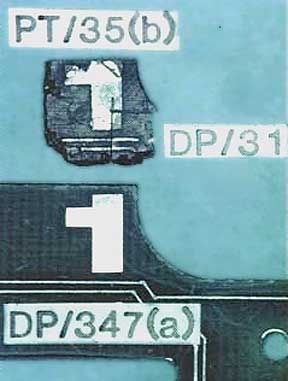
Feraday’s scientific findings relating to the Lockerbie investigation are inextricably linked and confused with those of his underling, Dr. Thomas Hayes, who has a proper PhD. I don’t know the arrangement, but Ferraday mentions analysis of the luggage and clothing that “was essentially done relatively early on, by Dr. Hayes, and then, obviously, checked by me.” (p 3328) The two are more famous for their handling of the miraculous timer fragment PT/35(b); Hayes found it in a shirt collar and alerted Feraday, who passed the news on to Williamson, and thence to Henderson, Marquise, Thurman, “Orkin” and the history books. In testimony Feraday also clarified the interchangeable nature of their collaboration “I did not always, when I was looking at [evidence], make any difference between myself and Hayes” (p. 3332)
The prosecution generally seemed to feel the same way; their habit of asking questions of Feraday better suited for the earlier witness led Mr. Keen to lodge for private audience with the judges. Once Feraday was sent from the room, Keen argued in part:
According to the evidence of this witness, he prepared the final report on the basis of his examination of certain matters, and by considering Dr. Hayes' notes. What my learned friend appears to be inviting is hearsay evidence […] I object to the Crown canvassing hearsay evidence, even in the context of what is referred to as a joint report, in respect of such a matter. If they wish to take direct evidence on this issue, then they had ample opportunity of doing so with Dr. Hayes. And in my submission, it is not competent for them to take hearsay evidence on this matter from Mr. Feraday. (pp 3215-3216)
Nonetheless the questioning continued in a similar line, a hundred pages later coming to my point of interest, the unusual collaboration on another piece of evidence: a damaged piece of luggage, described as “a purple-coloured holdall” and labeled PH/137. This bag, Feraday had wrtten in his final report of 1989, had within it two metal fragments “which both originate from the primary IED suitcase,” so it should be of some interest. Mr. Keen for the Defense addressed Dr. Hayes' draft report during his questioning of Feraday. He cited page 23 as listing categories including "Likely Explosion Damaged Luggage,” and noted that one item listed in that heading is PH/137. Feraday confirmed these facts while comparing with his own copy.
Q So from Dr. Hayes' draft report -- and I think you just told us he prepared this part of the report -- we can see that he designated this as explosion-damaged luggage?
A I think it was lightly --
Q Lightly explosion-damaged luggage?
A Yes.(pp 3330-3331)
This attitude would help explain Feraday’s own notes, Production 1498, in which Keen noted “that nowhere in the index” and in fact “nowhere in your examination notes does the item PH/137 appear.” The witness confirms to both “that's correct, sir. Yes.” Of course lightly blast-damaged was a fudging statement and further probing shows him to believe it wasn’t in the explosion damage at all. Next Mr, Keen pulled up a photograph of this item. (Production 181, photograph 91)
Q It is apparent, is it not, Mr. Feraday, that you have not signed the label as it is photographed in photograph 91?
A That's correct, sir. Yes.
Q But your signature now appears on the label PH/137 in court?
A Yes, sir.
Q When did you sign that label, Mr. Feraday?
A When I had the bag back to write this -- the final report.
Q And what date was that, Mr. Feraday?
A I can't tell you without looking it up again on a list, I'm afraid.
Q Are you saying that that was before December 1991?
A I think it must be, yes. I finished the report by then, so yes.
Q And are you saying that you examined PH/137 before you finished the report?
A Yes, sir.
Q Where are the notes of that examination, Mr. Feraday?
A Well, there aren't any, because as I said, I did not always, when I was looking at them, make any difference between myself and Hayes -- although in this instance I did, and I told him so, that in my opinion you couldn't necessarily put that in the explosion damage. I couldn't convince myself that it was explosion damage. Prior to that, Hayes had written this preliminary report for another purpose -- I think the Fatal Accident Inquiry -- (pp 3331-3333)
So if I’m reading this right, he disagrees with the actual PhD scientist, but did no detailed, documented, admissible examination of his own to back this up. He couldn't recall when he made his divergent inspection, but did immediately recall that he made no notes for it. His lack of notes in turn is justified "because" they agree on things, "although" not in this case. Got it.
Notes or not, the reason for Feraday’s divergence seems to be an unexplained lack of conviction, with which Hayes lodged no disagreement:
Q And you recall --
A Sorry, I'm waiting for the --
Q I don't think you had finished, Mr. Feraday, so do finish your answer if you wish.
A Sorry. I came to the conclusion that I couldn't myself put it in the explosion – necessarily in the explosion-damaged baggage. I'm not saying it isn't, but I couldn't convince myself. And I still can't. And for that reason, I had a word with Hayes, and we agreed to put it in the second section.
Q So you -- you recall discussing this with Dr. Hayes, do you?
A At some stage I discussed it with Dr. Hayes, but I can't remember exactly when or if, in fact, it was when the -- I wrote the final report. And then Hayes certainly came in, obviously, and read it all and then signed, and we went through each item then. We through the report, if you like, line by line.
Q Line by line, Mr. Feraday?
A Well, he read through it, obviously, line by line. (pp 3333-3334)
This implies no disagreement; Hayes was able to check Feraday’s findings and found no problem with the exclusion of PH/137 that Feraday had already decided on and reported. Next, Mr. Keen turned to Feraday’s given reasoning, in that report, to support his agnosticism.
Q If you would like to turn for a moment, Mr. Feraday, to your report 181 at page 51.
A Yes, sir.
Q Now, we can read this section for ourselves, but I'd like to look in particular at the third paragraph on that page, which you corrected during your examination in chief chief [a meeting just before his questioning - ed] by proposing the insertion, after the fourth word in the first line, of the word "other"?
A Yes, sir.
Q Now, taking the paragraph, of course, in its context, can we read that corrected paragraph. It states: "As there are no other penetration holes in either the holdall or the plastics bag, it appears most likely that these two fragments, which both originate from the primary IED suitcase, were picked up and placed inside the plastics bag, which was then itself
placed inside the purple holdall for convenience of carriage."
A Yes, sir.
Q Now, I have to suggest, Mr. Feraday, that if you insert the word "other" into that paragraph in the context of this section, the paragraph is deprived of sense or content.
A Is ... ?
Q Deprived of any sense or content. It tells us absolutely nothing if you correct it in that way. What do you say to that?
A I am not sure what you mean. But what it would then say is as there are no other penetration -- at the top of the page, I am talking about the ragged horizontal cuts which, obviously, one can see as penetrations. I see them as cuts. Now, in dealing with, first of all, the holdall, there are no other penetration holes in it, other than those that I've already said about the cuts. And in the plastics bag, there were none, the plastics bag which contained the two fragments of metal from the suitcase. So I was left scratching my head as to how they can get inside there, in a plastics bag, if they didn't come through any part of the bag.
Q Do you --
A I can't convince myself they come through the ragged cuts.
Q You recollect the label attached to the plastics bag, Mr. Feraday, having said "two pieces of metal, charred, found within baggage."
A Yes, I do, sir.
Q And you recollect finding penetrations in the side of the bag that went right through to the interior of the bag?
A Horizontal cuts, yes, sir.
Q But you felt it pertinent to remind us that there were no other penetrations in the bag, Mr. Feraday; is that right?
A Not big enough for the -- for anything to do with the two pieces of metal. That's correct, sir, yes.
Q But the penetrations you'd already found were big enough for the penetration of the two bits of metal?
A Oh, yes, sir.
Q Well, that might be an appropriate point, My Lords, if there is to be a short adjournment.
LORD SUTHERLAND: Yes, very well. We'll adjourn for 15 minutes. (3334-3336)
I can only paraphrase Michael Palin in The Holy Grail “what a strange person.” Mr. Feraday’s stated reasoning then seems to be that even though these shards could fit through the penetrations if explosively hurled there, he couldn't convince himself this was what happened and chose to think of them as surface "cuts." Who knows what caused these cuts - perhaps the hold-all fell through a tree before landing. And the two unrelated IED suitcase bits were found elsewhere and simply put in the bag far carrying, with no note about being found elsewhere. His report first supported this saying there were "no penetrations" in the bag, corrected only in his examination in chief (a meeting just before his questioning) to "no other pentrations," aside from the "cuts" that they probably did enter through.
His references to the plastic bag is curious. This would clearly seem an ad hoc evidence bag (probably not a proper one or he’d teerm it as such), into which the shards were placed after being found. This would be a careless and illogical move, but I don't see anything else making sense. Transferring these also into a bag they weren’t found in makes this faux pas worse – something Mr. Feraday should have reported rather than just using it as he did to remove the explosion from PH/137. A lack of damage to this evidence bag is also cited as a clue these didn't fly in thru the cuts: “[T]here are no other penetration holes […] in the plastics bag […] which contained the two fragments of metal from the suitcase. So I was left scratching my head as to how they can get inside there, in a plastics bag, if they didn't come through any part of the bag.” This in particular is a ridiculous non-sequitur, but another clue to Feraday this was not explosion damage.
In the most rational explanation for this thought process, perhaps he just meant, "obviously, the bomb didn't put these metal shards in the plastic bag, one of our people did. Therefore, they probably got the scraps from somewhere else, but threw them in there instead." And perhaps if we could see the evidence we'd see why he felt the shards did not just enter through the tears. But for whatever intention, he effectively erased this piece of evidence from the bomb site picture – where Dr. Hayes had already placed it - based on his unexplained solution.
Although he comes across looking incompetent – nearly always looking at the wrong exhibit and frequently befuddled - I suspect Feraday is not actually an idiot. Therefore, if he seems like one, he may be playing dumb and that's often a clue. However I simply don't have the information to know just what this might mean. Detailed information on loading procedures at Heathrow could tip us off to where this bag might have wound up. Was the location of this item relative to, say, the Bedford suitcase, troubling in some way? Considering Feraday's strained logic over this issue, I suspect we may be looking at a valuable clue, if just another on the pile indicating he was not playing on the level with this investigation.