An informed citizenry being central to a working democracy, we were never informed of Northwoods; neither Lemnitzer nor McNamara burst Americans’ bubble by publicizing this in any way and it remained a dirty little secret at the time and for decades to come. The memo was in fact ordered destroyed and erased, but somehow one copy survived in an archive somewhere. It was finally declassified in the mid-1990s, apparently part of the post-Oliver Stone “JFK” conspiracy craze that forced Clinton’s hand to release a number of Kennedy-era secret papers.
In April 2001 this copy made it to the eyes of the public in the pages of the massive Body of Secrets: Anatomy of the Ultra-Secret National Security Agency. Its author James Bamford has worked for ABC World News Tonight as senior Washington Investigative Reporter, and had already written his groundbreaking The Puzzle Palace (1982), the first book published about the hitherto top-secret National Security Agency. Worried about the NSA’s unveiling to the eyes of the world, the Reagan administration initially blocked the book’s publication. But it was finally published and Bamford was in fact invited back for more, with Body of Secrets again primarily about the now less-secret NSA. The chapters are named after parts of the body, with the Northwoods-related chapter being “Fists.” Bamford included this JCS plot, not even part of the NSA anatomy, to illustrate tensions between Lemnitzer’s military plan for Cuba and the slicker approach of NSA and CIA-types, which was more favored by Kennedy.
So clearly the JCS had “quietly slipped over the edge,” but the sole existing evidence of that slippage, the one salvaged copy of Operation Northwoods, sat just as quietly for decades until April 2001, just five months before the September 11 attacks, offering a strangely-timed glimpse into the dark machinations of Lemnitzer’s Joint Chiefs.
Submitted for your approval (props to Serling): On the morning of September 11 2001, Vice-Chairman Richard Myers was standing-in as JCS Chairman, his boss having departed that very morning for pre-arranged business in Europe. Myers took the helm in the same post once held by Lemnitzer just as the day’s Joint Chiefs-NORAD war game “Vigilant Warrior,” and the first hijacking of the morning, began. As Mike Ruppert explains in his 2004 Crossing the Rubicon, it seems any war game with the word “warrior” attached involved “live-fly” planes, possibly drones, feigning hijack symptoms. Two days after this curious confluence of events, Myers was promoted to permanent JCS Chairman, as previously scheduled.
This doesn’t necessarily prove anything, but it’s interesting to note that McNamara and Rumsfeld are two very different people. And clearly, Myers will now be on board to defend the official story of 9/11. He found himself in a curious spot (an integral part of the chain of command in emergencies like 9/11) at a curious time (five months after Northwoods was first publicized and minutes before the attacks began). Thus whether he was involved with the operation or not, he may be the first to go down if the official story should collapse; so far he has done nothing to upset that official story.
But Northwoods proposed limited and tightly-controlled fake attacks, mostly in remote military installations, along the lines of a scaled-down Pearl Harbor. It did not promote multiple simultaneous fake attacks ranging over the northeastern U.S. mainland, nor planes flying into the military’s own headquarters, nor skyscrapers imploding and blanketing Manhattan in concrete and bone dust. Lemnitzer probably did not envision the “helpful” casualty lists to take seven to ten pages of U.S. papers, nor for the “wave of national indignation” to be of such tsunami proportions. Northwoods provides just a hint of Shadow 9/11 – bigger, uglier thinking and better technology would be required to pull off such a spectacular brand of inside job, and the stakes would have to be bigger than Cuba.
Showing posts with label JFK. Show all posts
Showing posts with label JFK. Show all posts
Wednesday, December 27, 2006


Thursday, November 23, 2006
NORTHWOODS I: LEMNITZER THE LANDMINE
TENSE TIMES IN THE CHICKEN HOUSE
1961: The Cold War was nearing its zenith of insanity, people were getting at each other’s throats over how to deal with the USSR and its two new and troubling satellites: Sputnik and Cuba. By the end of 1960, the Soviets had taken the lead in the emerging space race and opened a new storefront just eighty miles from Florida, and the first worries over the apparently fictitious “misile gap,” a widening margin by which the Soviets were thought to have us out-armed, had been aired. Concerns were growing on the political right about communist infiltration at home, with some insisting that this was a more immediate menace even than the Soviet Union itself. And then to top this off there was the big political re-shuffling that accompanied the tumultuous 1960 presidential election.
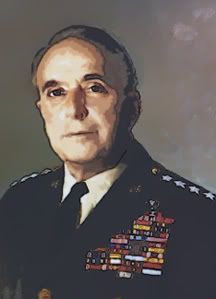
General Lyman L. Lemnitzer (US Army) was a troubled man. Maybe it was the excess of Ls in his name, maybe it was just the tense times. He had been a military protégé of General Eisenhower in World War II, helping plan the early invasions of North Africa and Sicily. At war’s end he was involved in securing the surrender of the Axis leadership, working closely with Allen Dulles, who would later head the CIA; Lemnitzer has been accused of helping some former Nazis move to South America, and he helped others to stay behind in Europe, under the auspices of NATO, as spies against the USSR. [1]
By 1960, Lemnitzer was chief of staff for the Army, and Eisenhower was finishing his second term as President of the U.S. In November it became clear that Democrat John F. Kennedy, not Eisenhower’s vice president Richard Nixon, would be the next president; at this point, Eisenhower turned to his old aide Lemnitzer, appointing him Chairman of the Joint Chiefs of Staff, the highest military post in the country, in regular contact with the president. According to James Bamford in Body of Secrets (2001) Lemnitzer’s view of Eisenhower at this time of this promotion reportedly “bordered on reverence.” By leaving Lemnitzer behind, Bamford wrote, “Eisenhower would have a window onto the next administration,” and as would become clear in due time, Lemnitzer would also “become a landmine in the Kennedy administration.” [2]
Lyman was a hard line anti-Communist, an immaculate planner and control freak. According to Bamford, upon becoming chairman, “he sent out elaborate instructions outlining exactly how his fellow chiefs were to autograph group pictures – they were to sign their names directly under his, and they must follow his slant.” [3] He was reportedly not pleased to be working under Kennedy, and he wasn’t the only one. Fears were widespread, especially in the military, that Kennedy, his brother, and the rest of their team were inexperienced, liberal, and/or soft on communism. These concerns were very serious, and would come to a head very quickly over response to the revolution in Cuba.
Planning for the elimination of Fidel Castro's new regime had already begun under Eisenhower; as Kennedy came to office, two primary models prevailed, one backed by the military, one backed by the still-new CIA. Kennedy wanted no proof of American involvement, fearing that would antagonize the Soviet Union and world opinion. Thus he preferred the sneakier CIA model, based on the earlier and successful CIA-led operations that overthrew the Presidents of Iran and Guatemala. This was the basic model that came to be - injecting a force of nominally independent Cuban exiles back into their homeland, and hoping that they unite the oppressed peasantry behind themselves and march on Havana. No American forces or aid was to be seen, but secret training and arming was done in the southern U.S. and - surprise - the recently-re-subdued Guatemala. [4]
Lemnitzer and those of like mind felt that Kennedy underestimated the Castro regime, which was starting to receive military supplies and pilot training from the communist government of Czechoslovakia. “Time is working against us,” Lemnitzer told Kennedy at their first meeting on January 25. [5] He felt that America had to risk direct military involvement if they wanted success, and predicted that if the CIA’s sloppy plan were used, it would end in disaster. [6] It was used, and it failed spectacularly in mid-April, just three months after Kennedy was sworn in. The failed invasion, even though it was not planned by Kennedy himself, displayed to some exactly the inexperience they feared, and the invasion, while very hard on the anti-Castro forces who were mowed down, was very soft on Castro himself.
While the military mistrusted the Kennedies, much of the public and their Congress at the time were worried about the military. Eisenhower himself had warned in his farewell address, January 17 1961, of the dangers of the “military industrial complex.” He emphasized the need for “an alert and knowledgeable citizenry” to “never let the weight of this combination endanger our liberties or democratic processes.” Such fears were widespread in the following years, as evidenced by the later success of the 1964 film Seven Days in May. Starring Kirk Douglas and written by Rod Serling, the film was about a military coup against a president perceived as soft on communism, led by the Joint Chiefs of Staff.
Congress stepped in with a 1961 Senate Foreign Relations Committee investigation of right-wing activity in the military, and Lemnitzer himself came under their microscope. Among the most critical of the JCS chairman in the hearings was Sen. Al Gore sr. (D-TN) Citing recent right-wing military revolts and coups in France and elsewhere, the committee published a report on their findings of a “considerable danger” in the “education and propaganda activities of military personnel.” [7]
The committee also called for an investigation of possible ties between Lemnitzer himself and right-wing groups like the John Birch Society (JBS) and his awareness of the activities of former Major General Edwin Walker. Walker was a right-winger accused of pushing racist ideas and JBS propaganda on his subordinates. He had resigned when singled out by Defense Secretary Robert McNamara in April 1961, becoming more vocal in his charges that Communists had infiltrated the administration. [8] Walker made a failed bid for Governor of Texas in 1962, losing badly to Tom Connally. In 1963 he began “Operation Midnight Ride,” an evangelical anti-communist crusade. [9] At this time Walker and his aides say he was being trailed and spied on by mysterious men, one of whom allegedly shot at him on April 10 but by pure luck missed Walker's head. The crime went unsolved for over eight months before the FBI, Dallas PD, and Walker himself identified the gunman as none other than Lee Harvey Oswald, the master marksman who had just blown off the President's head. [10] Hmmm…
As Kennedy came to power amid the Bay of Pigs fiasco, in late April 1961 he met with General Douglas MacArthur. According to Kennedy aide Theodore Sorenson, MacArthur told Kennedy “the chickens are coming home to roost, and you happen to have just moved into the chicken house.” [11] And of course the evolving Cuba situation would soon lead to the Missile Crisis of 1962, followed by the 1963 murder of president Kennedy before the nation’s eyes, allegedly by Walker’s stalker, providing the most vivid national trauma for nearly four decades.
But I'm no expert in this field and this is all a bit of an aside from the story of Lyman L. Lemnitzer and Operation Northwoods, to which we turn in the next post.
Sources:
[1] Petit, Andres. “Operation Northwoods: Joint Chiefs of Staff USA.” AfroCubaWeb. Last Modified August 20, 2004. Accessed November 13 2005 at: http://www.afrocubaweb.com//news/northwoods/northwoods.htm
[2] Bamford, James. Body of Secrets: Anatomy of the Super-Secret National Security Agency. New York. Anchor Books. First Anchor Books edition. 2002. Pages 67, 68
[3] See [2]. Page 73.
[4] "Bay of Pigs Invasion." Wikipedia. http://en.wikipedia.org/wiki/Bay_of_Pigs_Invasion
[5] See [2]. Page 72.
[6] See [2]. Page 73.
[7] See [2]. Page 80.
[8] See [2]. Page 79.
[9] “Edwin Walker.” Wikipedia. Accessed November 1, 2005 at: http://en.wikipedia.org/wiki/Edwin_Walker
[10] North, Mark. Act of Treason: The Role of J. Edgar Hoover in the Assassination of President Kennedy. New York. Carroll and Graf Publishers, Inc. First Carroll and Graf edition. 1991. Page 255
[11] Tarpley, Webster G. and Anton Chaitkin. George Bush, the Unauthorized Biography. Ch VIII-b: The Bay of Pigs and the Kennedy Assassination. Accessed November 8, 2005 at: http://www.tarpley.net/bush8b.htm
1961: The Cold War was nearing its zenith of insanity, people were getting at each other’s throats over how to deal with the USSR and its two new and troubling satellites: Sputnik and Cuba. By the end of 1960, the Soviets had taken the lead in the emerging space race and opened a new storefront just eighty miles from Florida, and the first worries over the apparently fictitious “misile gap,” a widening margin by which the Soviets were thought to have us out-armed, had been aired. Concerns were growing on the political right about communist infiltration at home, with some insisting that this was a more immediate menace even than the Soviet Union itself. And then to top this off there was the big political re-shuffling that accompanied the tumultuous 1960 presidential election.
 |
By 1960, Lemnitzer was chief of staff for the Army, and Eisenhower was finishing his second term as President of the U.S. In November it became clear that Democrat John F. Kennedy, not Eisenhower’s vice president Richard Nixon, would be the next president; at this point, Eisenhower turned to his old aide Lemnitzer, appointing him Chairman of the Joint Chiefs of Staff, the highest military post in the country, in regular contact with the president. According to James Bamford in Body of Secrets (2001) Lemnitzer’s view of Eisenhower at this time of this promotion reportedly “bordered on reverence.” By leaving Lemnitzer behind, Bamford wrote, “Eisenhower would have a window onto the next administration,” and as would become clear in due time, Lemnitzer would also “become a landmine in the Kennedy administration.” [2]
Lyman was a hard line anti-Communist, an immaculate planner and control freak. According to Bamford, upon becoming chairman, “he sent out elaborate instructions outlining exactly how his fellow chiefs were to autograph group pictures – they were to sign their names directly under his, and they must follow his slant.” [3] He was reportedly not pleased to be working under Kennedy, and he wasn’t the only one. Fears were widespread, especially in the military, that Kennedy, his brother, and the rest of their team were inexperienced, liberal, and/or soft on communism. These concerns were very serious, and would come to a head very quickly over response to the revolution in Cuba.
Planning for the elimination of Fidel Castro's new regime had already begun under Eisenhower; as Kennedy came to office, two primary models prevailed, one backed by the military, one backed by the still-new CIA. Kennedy wanted no proof of American involvement, fearing that would antagonize the Soviet Union and world opinion. Thus he preferred the sneakier CIA model, based on the earlier and successful CIA-led operations that overthrew the Presidents of Iran and Guatemala. This was the basic model that came to be - injecting a force of nominally independent Cuban exiles back into their homeland, and hoping that they unite the oppressed peasantry behind themselves and march on Havana. No American forces or aid was to be seen, but secret training and arming was done in the southern U.S. and - surprise - the recently-re-subdued Guatemala. [4]
Lemnitzer and those of like mind felt that Kennedy underestimated the Castro regime, which was starting to receive military supplies and pilot training from the communist government of Czechoslovakia. “Time is working against us,” Lemnitzer told Kennedy at their first meeting on January 25. [5] He felt that America had to risk direct military involvement if they wanted success, and predicted that if the CIA’s sloppy plan were used, it would end in disaster. [6] It was used, and it failed spectacularly in mid-April, just three months after Kennedy was sworn in. The failed invasion, even though it was not planned by Kennedy himself, displayed to some exactly the inexperience they feared, and the invasion, while very hard on the anti-Castro forces who were mowed down, was very soft on Castro himself.
While the military mistrusted the Kennedies, much of the public and their Congress at the time were worried about the military. Eisenhower himself had warned in his farewell address, January 17 1961, of the dangers of the “military industrial complex.” He emphasized the need for “an alert and knowledgeable citizenry” to “never let the weight of this combination endanger our liberties or democratic processes.” Such fears were widespread in the following years, as evidenced by the later success of the 1964 film Seven Days in May. Starring Kirk Douglas and written by Rod Serling, the film was about a military coup against a president perceived as soft on communism, led by the Joint Chiefs of Staff.
Congress stepped in with a 1961 Senate Foreign Relations Committee investigation of right-wing activity in the military, and Lemnitzer himself came under their microscope. Among the most critical of the JCS chairman in the hearings was Sen. Al Gore sr. (D-TN) Citing recent right-wing military revolts and coups in France and elsewhere, the committee published a report on their findings of a “considerable danger” in the “education and propaganda activities of military personnel.” [7]
The committee also called for an investigation of possible ties between Lemnitzer himself and right-wing groups like the John Birch Society (JBS) and his awareness of the activities of former Major General Edwin Walker. Walker was a right-winger accused of pushing racist ideas and JBS propaganda on his subordinates. He had resigned when singled out by Defense Secretary Robert McNamara in April 1961, becoming more vocal in his charges that Communists had infiltrated the administration. [8] Walker made a failed bid for Governor of Texas in 1962, losing badly to Tom Connally. In 1963 he began “Operation Midnight Ride,” an evangelical anti-communist crusade. [9] At this time Walker and his aides say he was being trailed and spied on by mysterious men, one of whom allegedly shot at him on April 10 but by pure luck missed Walker's head. The crime went unsolved for over eight months before the FBI, Dallas PD, and Walker himself identified the gunman as none other than Lee Harvey Oswald, the master marksman who had just blown off the President's head. [10] Hmmm…
As Kennedy came to power amid the Bay of Pigs fiasco, in late April 1961 he met with General Douglas MacArthur. According to Kennedy aide Theodore Sorenson, MacArthur told Kennedy “the chickens are coming home to roost, and you happen to have just moved into the chicken house.” [11] And of course the evolving Cuba situation would soon lead to the Missile Crisis of 1962, followed by the 1963 murder of president Kennedy before the nation’s eyes, allegedly by Walker’s stalker, providing the most vivid national trauma for nearly four decades.
But I'm no expert in this field and this is all a bit of an aside from the story of Lyman L. Lemnitzer and Operation Northwoods, to which we turn in the next post.
Sources:
[1] Petit, Andres. “Operation Northwoods: Joint Chiefs of Staff USA.” AfroCubaWeb. Last Modified August 20, 2004. Accessed November 13 2005 at: http://www.afrocubaweb.com//news/northwoods/northwoods.htm
[2] Bamford, James. Body of Secrets: Anatomy of the Super-Secret National Security Agency. New York. Anchor Books. First Anchor Books edition. 2002. Pages 67, 68
[3] See [2]. Page 73.
[4] "Bay of Pigs Invasion." Wikipedia. http://en.wikipedia.org/wiki/Bay_of_Pigs_Invasion
[5] See [2]. Page 72.
[6] See [2]. Page 73.
[7] See [2]. Page 80.
[8] See [2]. Page 79.
[9] “Edwin Walker.” Wikipedia. Accessed November 1, 2005 at: http://en.wikipedia.org/wiki/Edwin_Walker
[10] North, Mark. Act of Treason: The Role of J. Edgar Hoover in the Assassination of President Kennedy. New York. Carroll and Graf Publishers, Inc. First Carroll and Graf edition. 1991. Page 255
[11] Tarpley, Webster G. and Anton Chaitkin. George Bush, the Unauthorized Biography. Ch VIII-b: The Bay of Pigs and the Kennedy Assassination. Accessed November 8, 2005 at: http://www.tarpley.net/bush8b.htm
Subscribe to:
Posts (Atom)